
Vinegar, Baking Soda and Dish Soap: What Works and What Never to Mix
Most homes have a cupboard full of specialised sprays, one for glass, one for granite, one for wood, one for bathrooms, and most of them do the same three jobs. Understanding which everyday products actually work, and which combinations are dangerous, replaces about eighty percent of that cupboard.
The Three Things Cleaners Actually Do
Every cleaning problem is one of three types. Grease and organic soil needs a surfactant or an alkaline cleaner: dish soap, baking soda. Mineral deposits, soap scum and hard-water scale needs an acid: white vinegar, citric acid. Germs need a disinfectant with dwell time, which is a separate step after cleaning, not a substitute for it. Match the chemistry to the problem and the work gets much easier.
White Vinegar: Excellent, Within Limits
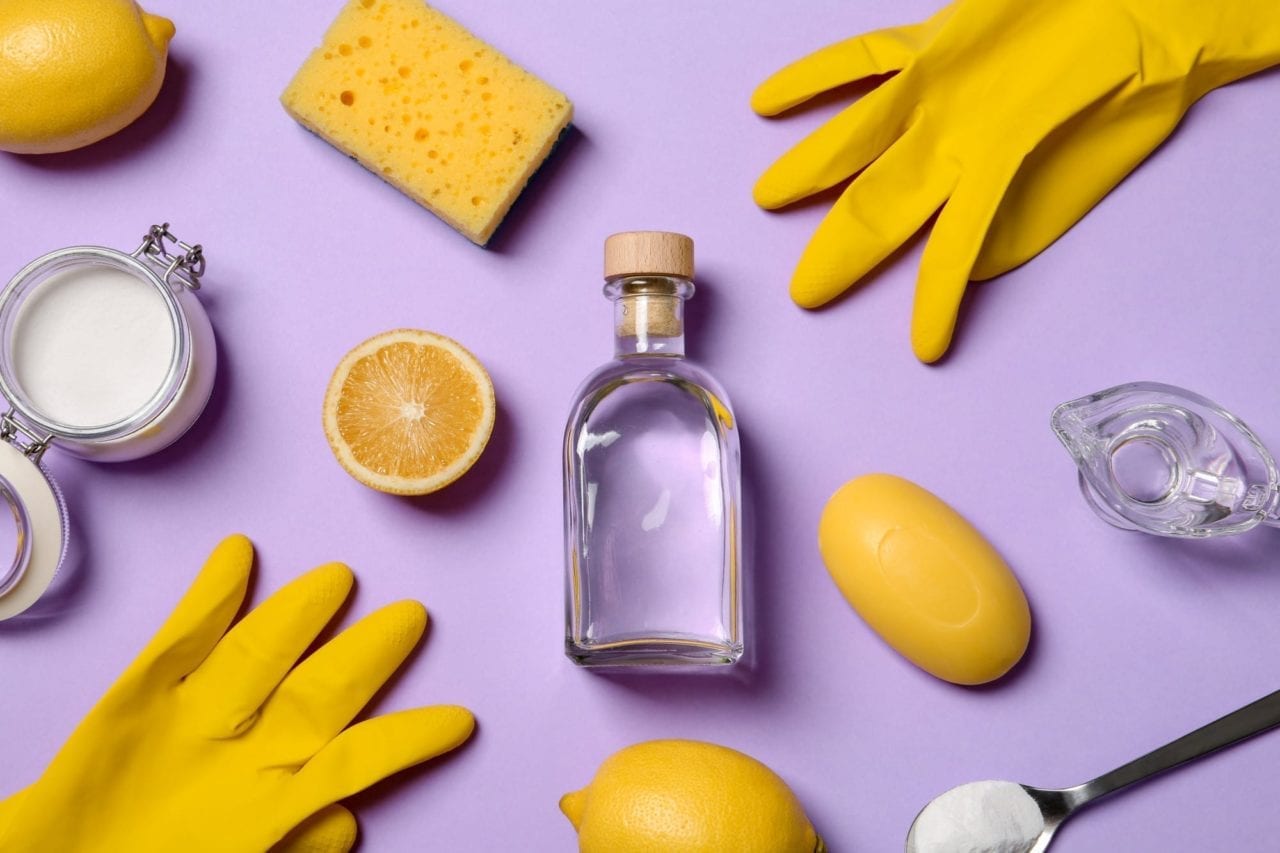
Vinegar is acetic acid, which makes it genuinely good at dissolving mineral deposits. Where it earns its place:
- Hard-water scale on taps, shower heads and glass. Bag a shower head in vinegar overnight and the spray pattern returns.
- Kettles, coffee makers and dishwashers, run through with a vinegar cycle.
- Washing machines, as a monthly hot cycle to clear detergent build-up.
- Windows and mirrors, diluted, finished with a dry microfiber cloth or newspaper.
- As a fabric softener replacement in the rinse; it leaves no residue and no smell once dry.
Where it should never go: natural stone of any kind, which it etches permanently; hardwood floors and polyurethane finishes, which it dulls; cast iron and unsealed grout; rubber seals on appliances, which degrade with repeated exposure. And vinegar is not a disinfectant in any meaningful sense. It is a cleaner, not a sanitiser.
Baking Soda: The Gentle Abrasive
Baking soda is mildly alkaline and mildly abrasive, which makes it good for the jobs where you want scrubbing power without scratching. Sprinkle it on a damp sponge for sinks, stovetops and tubs. Make it into a paste for oven interiors, baked-on pans, and grout. Use it dry to absorb odour in the refrigerator, in carpets before vacuuming, and in bins.
Combining baking soda and vinegar makes a satisfying fizz and, chemically speaking, mostly water and sodium acetate. It is useful mechanically for loosening a slow drain, but as a surface cleaner the two mostly neutralise each other. Use them separately and each is far stronger.
Dish Soap, the Most Underrated Product You Own
A few drops of dish soap in warm water cleans more surfaces than any other product in the house: floors, counters, walls, appliance exteriors, painted woodwork, most upholstery spot treatments, and outdoor furniture. It is a well-designed surfactant sold cheaply because it is sold in volume. Start here before buying anything specialised.
Combinations That Are Genuinely Dangerous
This section matters more than the rest of the page.
- Bleach + ammonia produces chloramine gas. Many glass cleaners contain ammonia.
- Bleach + vinegar or any acid, including many descalers and toilet bowl cleaners, produces chlorine gas.
- Bleach + rubbing alcohol produces chloroform and other toxic compounds.
- Hydrogen peroxide + vinegar in the same container makes peracetic acid, which is corrosive to skin, eyes and lungs.
- Different drain cleaners mixed in a blocked drain can react violently in a confined space.
The safe rule is simple: use one product, rinse thoroughly, ventilate, and only then use another. Never decant cleaners into unlabelled bottles, and never mix “just to make it stronger”.
Choosing Lower-Toxicity Products
“Natural”, “green” and “eco” are unregulated marketing words. What is worth checking is whether the manufacturer discloses the full ingredient list, whether the product carries a credible third-party certification, and whether “fragrance” appears as a single catch-all ingredient, since that term can cover dozens of undisclosed compounds and is a common trigger for headaches and asthma.
Fragrance-free is usually the better choice in a home with children, pets, asthma or chemical sensitivity. A home that smells of nothing is cleaner than one that smells of lemon.
Laundry: Use Less Than You Think
Most people use two to three times the detergent they need, which is the leading cause of stiff towels, grey whites, sour-smelling front-load washers and mildew in the door gasket. Excess detergent does not rinse out; it stays in the fabric and in the machine, and it feeds bacteria.
Use the marked line, not a full cap. Use high-efficiency detergent in an HE machine. Skip fabric softener on towels entirely, since it coats fibres and destroys absorbency, and use white vinegar in the rinse instead. For sensitive skin, a fragrance-free, dye-free detergent and an extra rinse cycle solves most problems that people blame on the detergent brand.
A Practical Starter Kit
Dish soap, white vinegar, baking soda, a pH-neutral floor cleaner appropriate to your floors, an oxygen-based powder for laundry and grout, one disinfectant for kitchen and bathroom use, and a stack of good microfiber cloths. That covers nearly every household cleaning task, costs less than the cupboard it replaces, and removes the temptation to mix things that should never meet.
Rather Have Someone Else Do It?
Lemon Blossom Cleaning Services has cleaned homes across Collin County, TX since 2008. If you would rather hand this job to a background-checked, GBAC-trained team that brings its own eco-friendly supplies, take a look at our Green Cleaning service, or see everything we offer on our residential cleaning services page.
We clean homes in McKinney, Plano and Celina, along with the rest of our Collin County service area. Call 469-617-7676 or request a free quote.
Share this article
Related Posts






Follow us
A quick overview of the topics covered in this article.