
How to Clean Every Type of Floor: Hardwood, Tile, Stone and Rugs
Floors take more abuse than any other surface in a house, and they are the surface most often damaged by well-meaning cleaning. The rules differ sharply by material, and the single biggest mistake is universal: too much water.
Sweeping and Dry Cleaning First, Always
Grit is what wears out a floor. Every particle of sand or clay tracked in from a North Texas yard acts like sandpaper underfoot, dulling finish and scratching hardwood. Removing it is the most valuable thing you do.
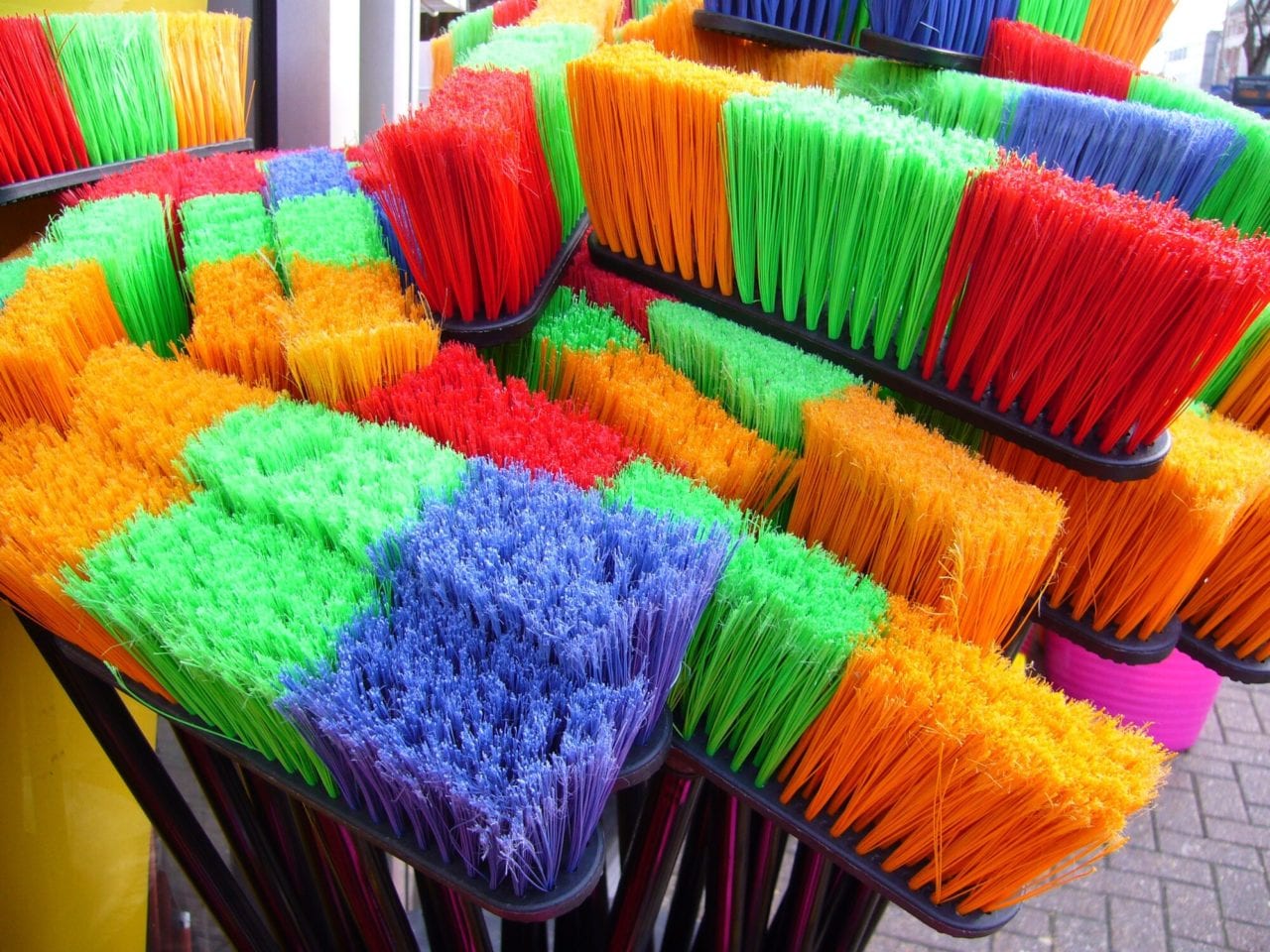
Sweep with the broom angled slightly, using short controlled strokes rather than long sweeping arcs, which push air and send fine dust airborne. Work from the edges of the room toward the centre, and from the far corner toward the door. Get the bristles right against the baseboard, where dust collects. Better still, use a microfiber dust mop, which traps fine dust instead of moving it around, then shake it out outside.
When you get to the dustpan line, spray a light mist of water on the floor in front of it; the remaining fine dust sticks rather than escaping under the pan.
Hardwood: Less Water Than You Think
Never wet mop hardwood. Water gets between boards, swells the wood and lifts the finish, and the damage is permanent.
Dust mop or vacuum with the beater bar off, then clean with a microfiber mop that is damp, not wet, using a cleaner made for hardwood. Wring the pad until no water drips. Work with the grain. If the floor stays visibly wet for more than a few seconds behind you, there is too much liquid on it.
Avoid vinegar and other acidic cleaners on polyurethane finishes, which they dull over time, and avoid oil soaps and steam mops, which leave residue or force moisture into the seams. Place felt pads under furniture legs, use mats at every exterior door, and take the grit off the floor before it grinds the finish away.
Tile, Stone and Laminate
Ceramic and porcelain tile tolerates real mopping. Use warm water with a neutral cleaner, change the water the moment it looks dirty, and rinse if the product leaves film. Dirty mop water is why tile floors look dull; you are spreading a thin layer of soil and drying it in place.
Grout needs periodic separate attention with an oxygen cleaner and a stiff brush, and sealing once a year keeps it from absorbing everything.
Natural stone such as travertine, marble and slate must never meet vinegar, lemon or any acidic cleaner, which etches the surface permanently. Use a pH-neutral stone cleaner only.
Luxury vinyl and laminate are water-resistant on the surface and vulnerable at the seams. Damp mop only, never flood, and never use abrasive pads on the wear layer.
Rugs
Check the label before anything else, and check the backing: jute and latex backings can be ruined by water. Vacuum both sides, which lifts embedded grit that vacuuming the top alone leaves behind, then treat spots by blotting from the outside of the stain inward so you do not spread it.
Wool needs cool water and pH-neutral cleaner, never oxygen bleach or hot water. Synthetics tolerate more. Antique, silk, and hand-knotted rugs should go to a specialist rather than into a bathtub; a botched home wash can destroy a valuable rug in one afternoon.
Dry rugs flat and fast, ideally with airflow underneath. A rug that stays damp for two days in a Texas summer will smell of mildew for years.
Spills, Scuffs and Makeup on the Floor
Speed matters more than technique. Blot liquids immediately with a dry cloth, working inward.
Powder cosmetics on carpet should be vacuumed first, gently, before any moisture touches them; water turns loose powder into dye. Then blot with a little dish soap in cool water.
Liquid foundation and cream products respond to a small amount of rubbing alcohol on a white cloth, dabbed rather than rubbed, then rinsed with plain water and blotted dry.
Nail polish can be lifted with acetone-free remover on a white cloth, but test in a hidden area first; some synthetic fibres dissolve.
Scuff marks on hard floors usually come off with a tennis ball or a melamine sponge used lightly and dry. On finished hardwood, use melamine sparingly, as it is a mild abrasive.
Always test any solvent on an inconspicuous patch, and always work from a white cloth so you can see what is transferring.
A Simple Routine
Daily in high-traffic zones: dust mop or vacuum entries and the kitchen.
Weekly: vacuum everything, damp mop hard floors.
Monthly: edges, under furniture, baseboards, rug rotation.
Annually: professional carpet extraction, grout sealing, and hardwood recoat when the finish starts to look tired rather than after it fails.
Rather Have Someone Else Do It?
Lemon Blossom Cleaning Services has cleaned homes across Collin County, TX since 2008. If you would rather hand this job to a background-checked, GBAC-trained team that brings its own eco-friendly supplies, take a look at our Maintenance House Cleaning service, or see everything we offer on our residential cleaning services page.
We clean homes in Wylie, Frisco and Plano, along with the rest of our Collin County service area. Call 469-617-7676 or request a free quote.
Share this article
Related Posts







Follow us
A quick overview of the topics covered in this article.