

How to Dust Your House Properly: A Room-by-Room Guide
Dust is the single most persistent cleaning problem in Collin County homes, and there is a reason for that. North Texas gives us cedar and oak pollen in late winter, ragweed in the fall, blackland clay soil that turns to fine powder every summer, and construction sites on nearly every horizon from McKinney to Celina. All of it ends up on your baseboards.
Dusting properly is not about moving dust around. It is about capturing it and getting it out of the house. Here is how we do it in thousands of homes a year.
The Rules That Make Dusting Actually Work
1. Work top to bottom, always
Gravity is the whole game. Start with ceiling fans, then crown molding and door frames, then shelves and furniture, then baseboards, and vacuum the floor last. If you vacuum first and then dust the fan, you have just made the floor dirty again.
2. Use dry microfiber, not a feather duster or furniture polish
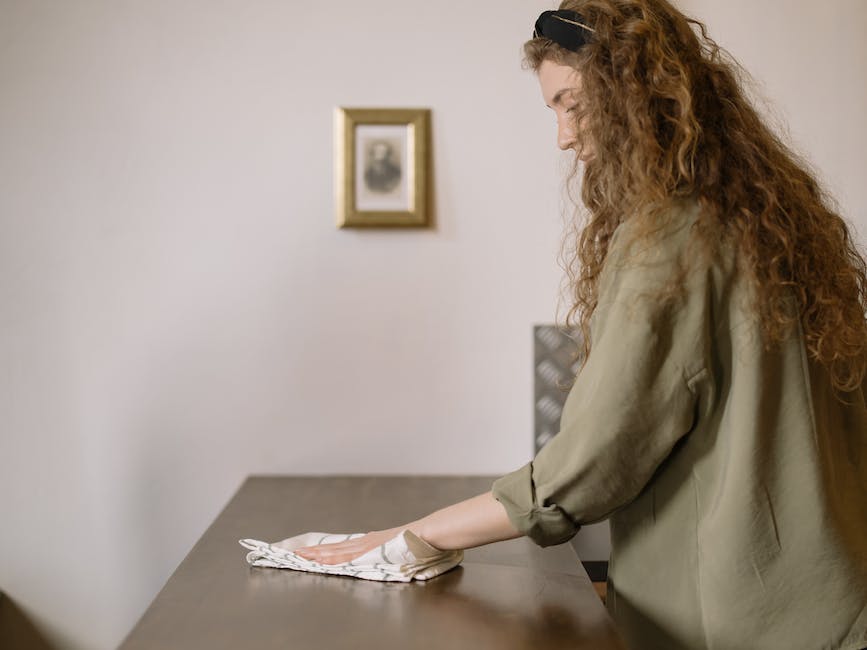
A feather duster launches dust into the air, where it settles somewhere else in about twenty minutes. Microfiber has a split fiber structure that traps particles electrostatically and holds them until you wash the cloth. Fold your cloth into quarters so you have eight clean surfaces, and rotate to a fresh face the moment one loads up.
Aerosol furniture polish is worse than useless on most modern furniture. It leaves a silicone film that attracts dust faster than the bare surface did, and on real wood it can build up into a haze. A dry microfiber cloth, or a barely damp one for a stubborn film, is all most surfaces need.
3. Change your HVAC filter far more often than the box says
In a Texas summer, your system may run sixteen hours a day. A filter rated for ninety days will be loaded in thirty. This is the single highest-impact dusting change most homeowners can make, and it costs a few dollars.
Ceiling Fans: The Pillowcase Trick
Slide an old pillowcase over each blade, then pull it back toward you. The dust is scraped off inside the case instead of snowing onto the bed below. Shake the pillowcase out over the trash outside, then wash it. Do this before you dust anything else in the room.
Fans in Collin County homes tend to run year-round, which means they accumulate a greasy film in kitchens and a felt-like mat in bedrooms. Once the loose dust is off, wipe the blades with a barely damp microfiber and dry them immediately so the wood veneer does not swell.
Blinds Without the Two-Hour Ordeal
For faux wood and vinyl blinds, close the slats one direction, wipe across with a microfiber cloth or a blind duster, then reverse the slats and repeat. Working across the slats rather than along them is faster and leaves fewer streaks.
For real wood blinds, keep water to a minimum. Dust dry first, then use a barely damp cloth on any remaining grime and dry it right away. Standing moisture warps wood slats permanently.
For heavily soiled kitchen blinds, where cooking grease has bonded with dust, a drop of dish soap in warm water on a well-wrung cloth cuts the film. Rinse with a second damp cloth so you are not leaving a sticky residue that collects dust again next week.
Cellular and fabric shades should only be vacuumed with a brush attachment on low suction. Wet cleaning them almost always leaves water rings.
Dust Mites: What Actually Reduces Them
Dust mites are microscopic, they live on shed skin cells, and they concentrate in bedding, upholstery and carpet. They do not care how tidy your house looks. What they respond to is humidity and heat.
- Wash bedding weekly at 130°F or higher. Cooler water rinses allergens away but does not kill the mites.
- Keep indoor humidity between 30 and 50 percent. Mites cannot survive below roughly 50 percent relative humidity. In a humid Texas August this means running the AC rather than opening windows.
- Use zippered allergen-barrier covers on mattresses and pillows. This is the most effective single intervention for people who wake up congested.
- Vacuum with a sealed HEPA machine. A vacuum without proper filtration passes fine allergens straight back into the room air.
- Freeze what you cannot wash. Twenty-four hours in a freezer kills mites in stuffed toys and small pillows.
Why Dust Gets Worse in Winter
It feels backwards, but indoor dust and allergy symptoms usually peak when the weather turns cold. Windows stay shut, the heater recirculates the same air, and the same particles cycle through the house instead of being diluted with fresh air. Meanwhile, mountain cedar pollen peaks in Texas from December through February and travels remarkable distances.
If your family starts coughing in January, the answer is usually a fresh filter, weekly hot-water bedding washes, and a genuine dusting of the surfaces nobody thinks about: the tops of door frames, the return air vent grille, the fan blades, and the top of the refrigerator.
The Places Everyone Forgets
- The return air vent grille (the single dustiest surface in most homes)
- Tops of door frames and window casings
- Behind and underneath the bed
- Lampshades and light fixtures, including recessed can trims
- Baseboards behind furniture
- The top of the refrigerator and upper cabinet crowns
- Air vents in ceilings and floors
- Behind the TV, where static makes dust cling to cables
A Realistic Dusting Schedule
Weekly: horizontal surfaces in living areas and bedrooms, plus vacuuming. Monthly: ceiling fans, blinds, baseboards, vents, lampshades. Quarterly: behind and under furniture, tops of cabinets, window tracks, and washing curtains. Anyone in the house with allergies should move the bedroom items up a tier.
Rather Have Someone Else Do It?
Lemon Blossom Cleaning Services has cleaned homes across Collin County, TX since 2008. If you would rather hand this job to a background-checked, GBAC-trained team that brings its own eco-friendly supplies, take a look at our Maintenance House Cleaning service, or see everything we offer on our residential cleaning services page.
We clean homes in McKinney, Plano and Celina, along with the rest of our Collin County service area. Call 469-617-7676 or request a free quote.
Share this article
Related Posts







Follow us
A quick overview of the topics covered in this article.